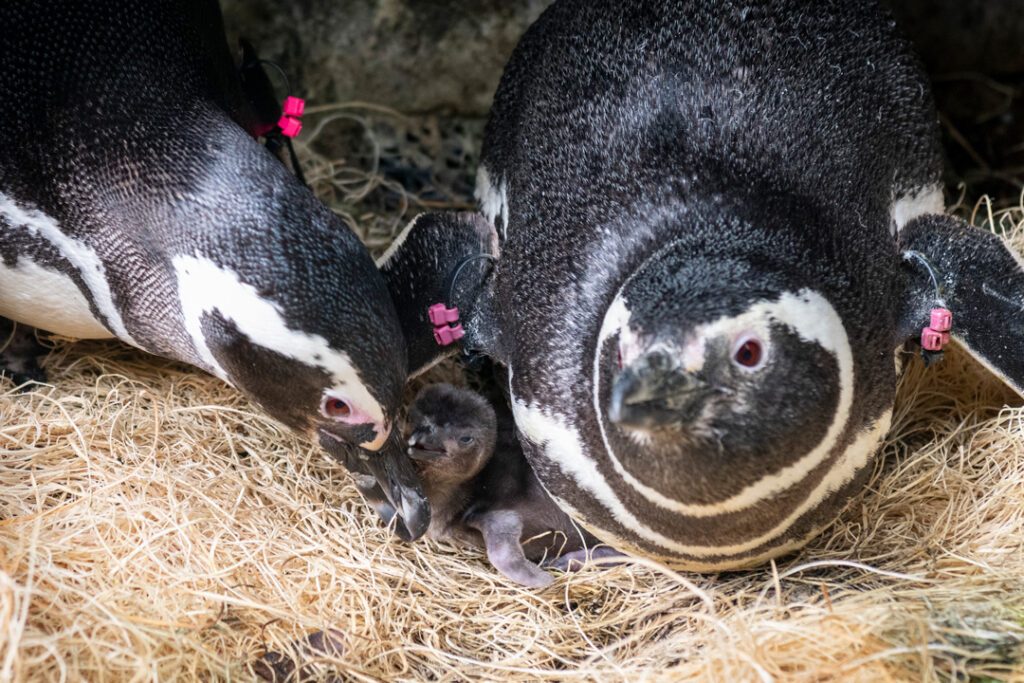
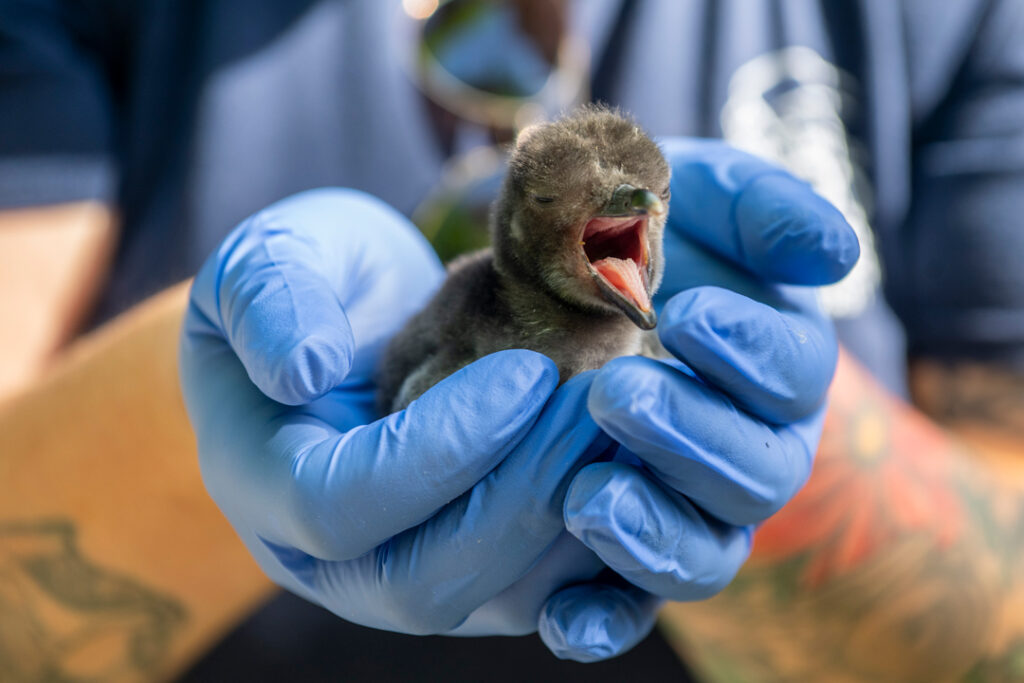
In mid-May, two chicks hatched to penguin pair Pink and Red, while a third chick hatched to Purple and White after receiving specialized artificial incubation support from the zoo’s animal care and veterinary teams.

The successful hatch marks the second year the zoo has used artificial incubation to support Purple and White’s breeding efforts. In 2024, the pair welcomed their first successful chick after the zoo incubated a penguin egg for the first time in its history.
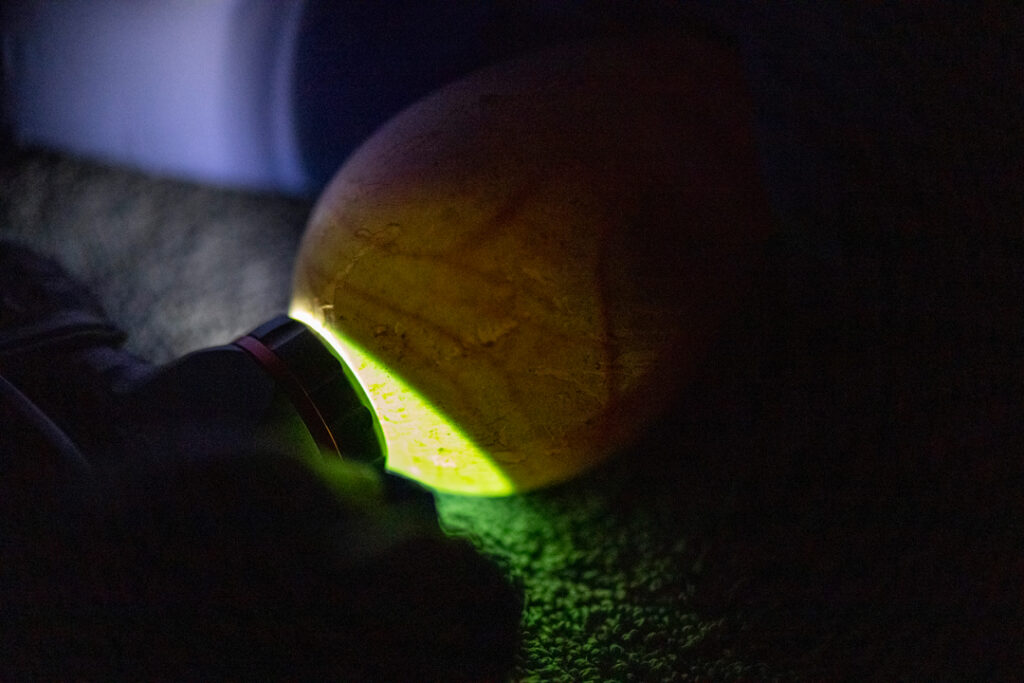
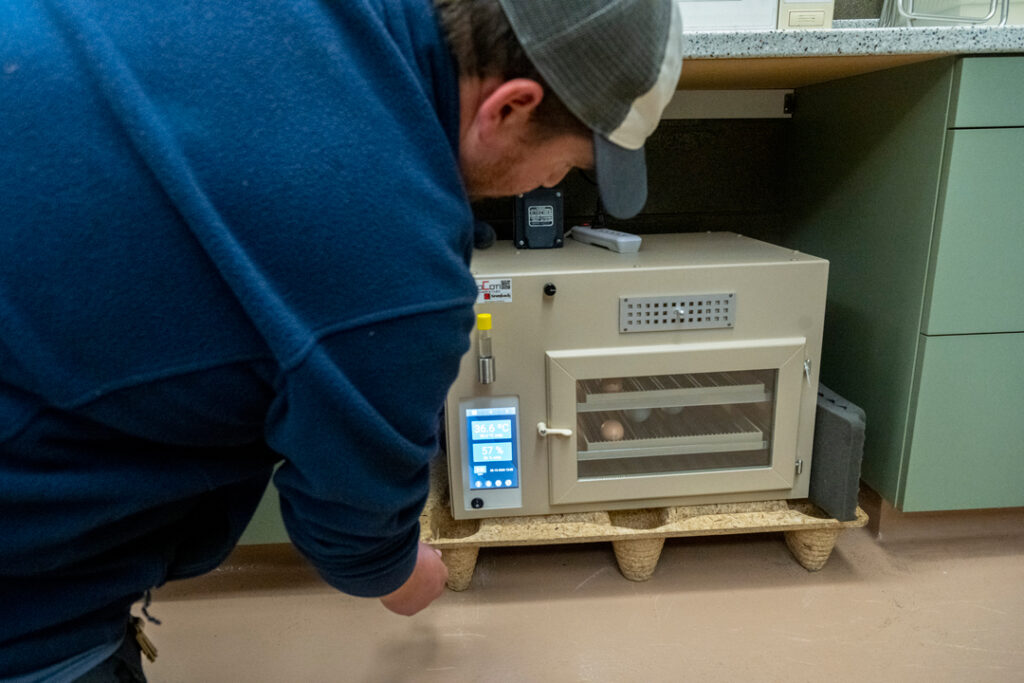
This year, the egg was carefully housed inside an incubator in the zoo’s healthcare building, where it remained at a steady 97.8 degrees Fahrenheit and 56% humidity. Keepers monitored the egg daily and veterinary staff regularly candled the egg, illuminating the inside to observe embryo development.

“It was fascinating to see the chick’s growth and progress,” said Jen DeGroot, the Rocky Shores curator.
Once keepers observed the chick beginning to pip, the first stage of hatching, the egg was moved back beneath Purple and White in their nest.

“The parents instinctively knew what to do,” said DeGroot.
This marks the tenth consecutive year the zoo has welcomed Magellanic penguin chicks as part of the Association of Zoos and Aquariums Species Survival Plan® (SSP) for the threatened species.
“These tiny chicks represent something much bigger than a successful season at the zoo,” said Matt Mauer, President of the Parks Tacoma Board of Commissioners. “Point Defiance Zoo & Aquarium continues to demonstrate how accredited zoos play a vital role in global conservation, scientific care, and inspiring our community to protect threatened species for generations to come.”
In the wild, Magellanic penguins face significant threats from oil spills, plastic pollution, and overfishing, making every successful hatch an important contribution to the species’ long-term survival.

Magellanic penguin eggs typically incubate for 38 to 48 days. After hatching, penguin parents instinctively care for their chicks by keeping them warm with brood patches and feeding them regurgitated fish, affectionately nicknamed “seafood slushies” by keepers.
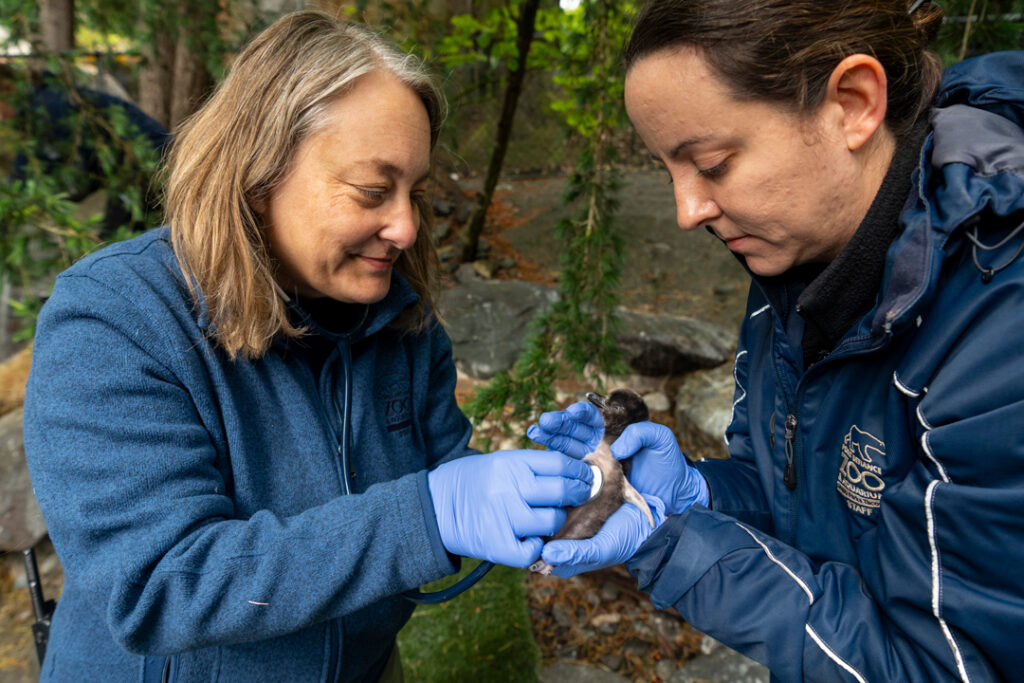
For the first several weeks, the chicks will remain mostly hidden beneath their parents, emerging only briefly for feedings. The zoo’s veterinarians and animal care staff will continue monitoring the chicks through routine exams and weigh-ins. Around one month old, the chicks will begin swimming lessons in shallow pools behind the scenes as they continue developing.

It will be several months before the chicks’ sexes are determined through DNA testing. Until then, guests visiting Penguin Point may catch a rare glimpse of a fluffy, down-covered chick peeking out from a burrow.