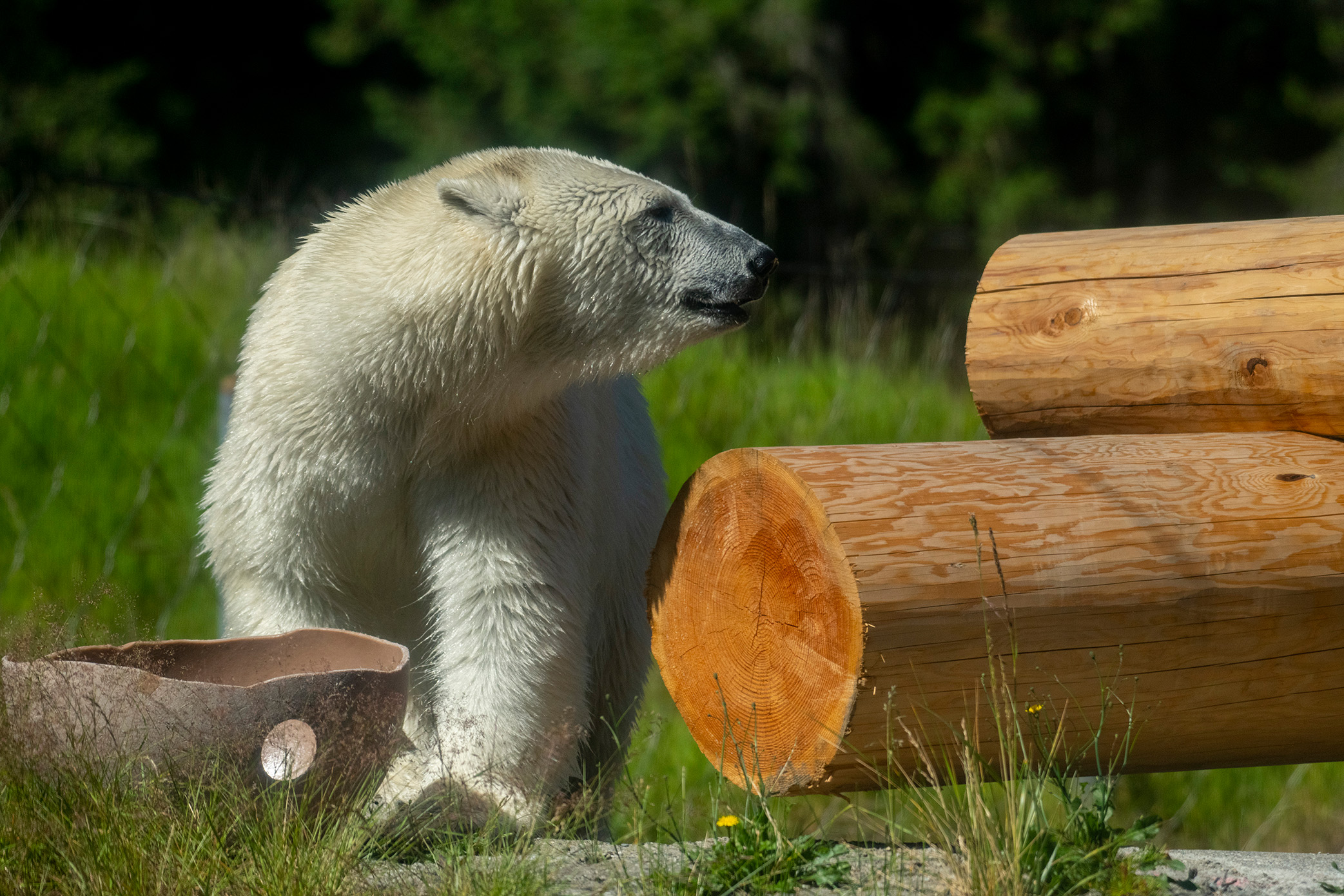
Astra, one of Point Defiance Zoo & Aquarium’s beloved 4-year-old polar bears, will soon move to another zoo accredited by the Association of Zoos and Aquariums (AZA) in the Midwest, as part of a breeding recommendation aimed at sustaining a healthy polar bear population in the United States. This effort is coordinated by the Polar Bear Population Alliance, a new collaboration among AZA accredited zoos. Guests are invited to say goodbye to Astra on Oct. 4 and 5.
“This move is a vital step in our commitment to safeguarding the future of this remarkable species,” said Malia Somerville, General Curator. “By participating in coordinated breeding efforts, we help ensure the long-term health and genetic diversity of polar bears.”
Breeding polar bears in U.S. zoos remains a significant challenge; no cubs have been born in the country in the past two years. This move is part of a larger, proactive strategy to support sustainable polar bear populations across accredited zoos nationwide.
“We’re making intentional, science-based decisions to ensure the survival of polar bears in human care,” Somerville added. “Successful breeding requires more than just opportunity—it depends on strategic pairings, the right timing, and collaboration among zoos. Astra’s move is a critical component of that broader conservation effort.”

Astra’s transition to her new home will be carefully managed. She will be gradually introduced to her new environment and companions under the supervision of the Midwest zoo’s experienced animal care team. Should Astra successfully breed, any cubs born will remain with her for approximately two years before becoming independent.
While Astra embarks on this new chapter, her sister, Laerke, will remain at Point Defiance Zoo. At 4 years old, Laerke is reaching an age where polar bears naturally begin to lead more solitary lives. Female polar bears typically only come together with males for breeding, and cubs stay with their mothers for about 2-3 years before becoming independent.
“This transition away from her sister is a natural part of her development,” said Jen DeGroot, Curator of the Rocky Shores area at the zoo. “Our dedicated team of keepers and veterinarians will closely monitor Laerke’s wellbeing and will help her adjust and build confidence during this change.”

Astra arrived at Point Defiance Zoo as a 2-year-old cub alongside Laerke. She grew up with her mother, Suka, and reunited with Laerke shortly before coming to Tacoma. Astra has grown into a curious, independent polar bear with a personality as large as her size. Her love for enrichment activities—designed to promote natural behaviors—has been a highlight of her time at the zoo.
“While we will miss Astra dearly, we’re proud to support polar bear conservation and excited for the new opportunities she will have,” said DeGroot. “We’re confident she will continue to be an incredible ambassador for her species.”
Astra recently underwent a pre-shipment examination and health assessment, typical for animals moving between zoos.
“The exam ensured Astra is fit to travel and safeguards existing animals at her new home,” explained Point Defiance Zoo’s Head Veterinarian Dr. Karen Wolf. “It also helps staff there understand Astra’s medical history and needs for better long-term care.”

Point Defiance Zoo has been home to polar bears for over 80 years, and the zoo’s animal care and board-certified veterinary teams bring decades of expertise in caring for these majestic creatures. The zoo is a leader in polar bear research and conservation, collaborating with organizations like Polar Bears International to help study and protect polar bears in the Arctic.
As a certified Arctic Ambassador Center through Polar Bears International, the zoo has supported innovative research, including the “Burr on Fur” study, which tests bear-friendly methods for attaching tracking devices to monitor wild polar bear movement patterns. Point Defiance Zoo has also partnered with scientists from the University of Washington to study hair growth in zoo bears to assess stress levels, contaminant exposure, and nutritional needs in wild polar bears.
Polar bears are classified as threatened under the U.S. Endangered Species Act. The International Union for Conservation of Nature’s Species Survival Commission considers them at high risk of global extinction. These animals rely on sea ice to survive, but climate change is causing the seasonal ice to shrink, threatening their habitat.
“Our polar bears have always inspired our community to take action and reduce their carbon footprint to help protect polar bears in the wild,” said Somerville. “Their presence at Point Defiance Zoo has played a crucial role in raising awareness about the ongoing challenges polar bears face due to climate change.”